
HR Investigation Report Sample PDF: A Comprehensive Plan
Comprehensive plans for HR investigations utilize readily available PDF templates, often editable in Word (.docx), ensuring US Letter & A4 compatibility.
These reports detail allegations, witness statements, timelines, evidence, findings, and recommended actions, with dedicated sign-off sections for all parties.
HR investigation reports are crucial documents detailing impartial inquiries into workplace concerns, ranging from policy violations to misconduct allegations. These reports, frequently available as PDF samples or editable templates (like Word ;docx files), serve as a formal record of the investigation process.
A well-structured report demonstrates an organization’s commitment to fairness, accountability, and legal compliance. Utilizing standardized templates, often in US Letter or A4 sizes, ensures consistency and thoroughness. The investigation process aims to gather facts, assess credibility, and reach objective conclusions.
Effective reports are characterized by clear documentation, including detailed allegations, witness statements, and a comprehensive timeline of events, ultimately supporting informed decision-making and appropriate resolutions.
Purpose of an HR Investigation Report
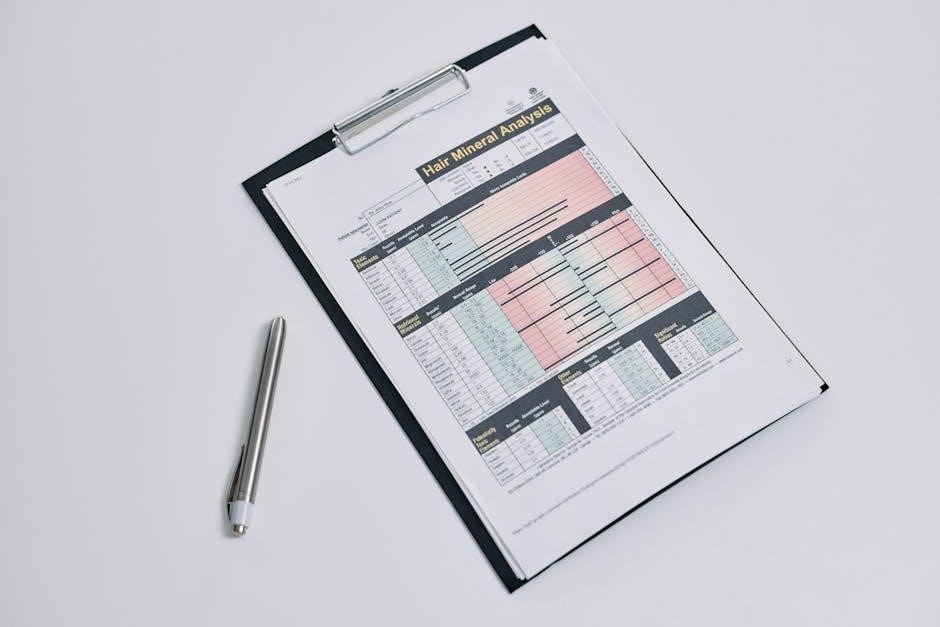
The primary purpose of an HR investigation report, often delivered as a PDF or originating from a Word (.docx) template, is to thoroughly document workplace issues. This documentation supports fair and consistent application of company policies and relevant employment laws.
These reports aim to determine the facts surrounding an incident, assess the credibility of involved parties, and identify any policy breaches or misconduct. A clear report facilitates informed decision-making regarding disciplinary actions or corrective measures.
Furthermore, a well-maintained report serves as crucial evidence in potential legal proceedings, demonstrating the organization’s due diligence and commitment to a safe and respectful work environment, available in formats like US Letter or A4.
Key Components of a Standard HR Investigation Report
A standard HR investigation report, frequently found as a PDF or editable Word (.docx) document, incorporates several key elements. These include detailed case information, a clear outline of the allegation and associated policy violations, and comprehensive witness statements.

A crucial component is a precise investigation timeline, documenting each step taken. The report must also detail evidence collection – documents, emails, and more – with a strict chain of custody.
Finally, an objective summary of findings, coupled with recommended actions and a sign-off section, completes the report, ensuring accountability and transparency, often formatted for US Letter or A4 paper sizes.
Essential Elements: Case Information Section

The case information section, a foundational part of any HR investigation report (often in PDF or Word format), meticulously details critical identifiers. This includes the precise date of complaint, the full name of the complainant, and a clear statement of the subject of investigation.
This section serves as the report’s core identifier, ensuring proper tracking and reference. A well-defined case information area, available in templates for both US Letter and A4 sizes, is vital for maintaining organization and clarity throughout the investigative process.
Accuracy in this section is paramount for legal defensibility and effective HR management.
Date of Complaint
Precisely recording the date of complaint is a fundamental element within the HR investigation report, whether delivered as a PDF or editable Word document. This timestamp establishes the initiation point of the investigation and is crucial for maintaining a clear timeline.
The date should be documented in a standardized format (MM/DD/YYYY or similar) to avoid ambiguity. Accurate dating is essential for demonstrating responsiveness to concerns and adhering to any relevant legal or policy-driven timeframes.
Templates, available in US Letter and A4 sizes, consistently include a dedicated field for this vital piece of information.
Name of Complainant
The name of the complainant is a critical piece of information within any HR investigation report, regardless of whether it’s a PDF or a Word (.docx) document. Accurate identification is paramount for proper investigation tracking and communication.

This field should include the complainant’s full legal name, and potentially their employee ID or other identifying details, ensuring clarity and avoiding confusion. Maintaining confidentiality is vital; access to this information should be restricted based on need-to-know principles.
Standard report templates, in both US Letter and A4 formats, dedicate a specific section for this essential data point.
Subject of Investigation
The Subject of Investigation section within an HR investigation report – be it a PDF or editable Word document – concisely defines the core issue prompting the inquiry. This isn’t merely a title; it’s a focused statement outlining the alleged misconduct or policy violation.
Templates, available in both US Letter and A4 sizes, emphasize clarity and specificity. Examples include “Harassment Complaint – John Doe” or “Violation of Company Attendance Policy.” A well-defined subject ensures all parties understand the investigation’s scope and prevents mission creep.
This section sets the stage for the detailed allegation documentation that follows within the report.
Detailed Allegation and Policy Violation Documentation
Detailed Allegation and Policy Violation Documentation forms the core of any robust HR investigation report, whether delivered as a PDF or editable Word (.docx) file. This section meticulously outlines the specific claims made by the complainant, avoiding generalizations.
It directly links these allegations to the relevant company policies allegedly breached, citing specific policy numbers and sections. Templates emphasize a clear, factual presentation, avoiding subjective interpretations.
The documentation should include dates, times, locations, and individuals involved, providing a comprehensive narrative. This detailed account is crucial for objective analysis and informed decision-making, ensuring fairness and transparency throughout the process.
Witness Statements: Gathering and Recording

Witness Statements are pivotal in HR investigation reports, often included in PDF or Word (.docx) formats. Templates emphasize obtaining signed, dated statements from all relevant parties, ensuring voluntary participation.
Investigators should use open-ended questions to encourage detailed responses, avoiding leading inquiries. Accurate recording is paramount; verbatim transcripts or detailed summaries are recommended.
Statements should document the witness’s direct observations, knowledge, and any relevant context. Maintaining confidentiality and protecting witness identities is crucial. Proper documentation strengthens the report’s credibility and supports objective findings, vital for legal defensibility.
Investigation Timeline: A Step-by-Step Account
A detailed Investigation Timeline is a core component of any thorough HR investigation report, frequently found within PDF or editable Word (.docx) templates. This section meticulously documents each step taken during the process, from initial complaint receipt to final resolution.
Entries should include dates, times, specific actions (e.g., interviews conducted, evidence collected), and personnel involved. A clear, chronological order demonstrates a systematic and impartial investigation.
This transparency is essential for legal defensibility and showcases the diligence applied to the case, bolstering the report’s overall credibility and ensuring accountability.
Evidence Collection and Management
Evidence Collection and Management is crucial within an HR investigation report, often detailed in PDF or Word (.docx) templates. This section outlines all gathered materials supporting the investigation, including documents, emails, and any other relevant data.
Proper documentation is paramount; each piece of evidence must be cataloged with a unique identifier and a clear description. Maintaining a strict Chain of Custody is vital, tracking who handled the evidence and when, ensuring its integrity.
Secure storage and controlled access are essential to protect confidentiality and prevent tampering, bolstering the report’s reliability.
Types of Evidence (Documents, Emails, etc.)
HR investigation reports, often formatted as PDFs or editable Word (.docx) documents, encompass diverse evidence types. Documents – including policies, procedures, and relevant agreements – form a foundational layer. Emails and electronic communications provide direct insight into interactions and potential misconduct.
Other evidence may include physical items, photographs, video recordings, and witness statements. Digital forensics can uncover deleted files or hidden data. Each item requires meticulous documentation, noting its source, date, and relevance to the allegations.
Thorough collection ensures a comprehensive and defensible investigation.
Chain of Custody Procedures
Maintaining a strict chain of custody is paramount when handling evidence for an HR investigation report, often documented in PDF or Word (.docx) formats. This process meticulously tracks evidence from collection to presentation, ensuring its integrity and admissibility.
Each transfer of evidence must be documented – detailing who handled it, when, and for what purpose. Secure storage is vital, limiting access to authorized personnel only. Any alteration or tampering must be immediately noted and explained.
A robust chain of custody safeguards against claims of evidence manipulation, bolstering the report’s credibility and legal defensibility.
The summary of findings within an HR investigation report (often compiled as a PDF or in Word .docx) presents an unbiased analysis of gathered evidence. It avoids speculation, focusing solely on substantiated facts derived from witness statements, documents, and other collected materials;
This section clearly articulates whether the allegations were substantiated, partially substantiated, or unsubstantiated, providing a concise overview of the investigation’s outcome.
Objective language is crucial; avoid subjective interpretations or personal opinions. The summary should directly correlate with the evidence presented, forming the basis for recommended actions.
Recommended Actions and Disciplinary Measures
Following an objective summary of findings – often documented in a PDF report created from a Word (.docx) template – the HR investigation report outlines recommended actions. These are directly linked to the substantiated allegations and company policy violations.
Recommendations may range from coaching or training for the involved employee(s) to more severe disciplinary measures, including warnings, suspension, or termination.
The report should clearly justify each recommended action, referencing specific evidence and relevant policies. Consistency with past disciplinary practices is vital, ensuring fairness and minimizing legal risk.
Report Format and Structure (PDF Considerations)
HR investigation reports, frequently finalized as PDF documents, benefit from a clean and minimalist layout, ensuring readability and professionalism. Templates, often originating in Word (.docx) for easy editing, should be unbranded for customization.
Consider both US Letter (8.5 x 11 in) and A4 (8.27 x 11.69 in) sizes to accommodate diverse needs. A logical structure, encompassing case information, allegations, findings, and recommendations, is crucial.
PDF format preserves formatting across platforms, vital for legal defensibility. Clear headings, numbered pages, and a table of contents enhance navigation and comprehension.
US Letter vs. A4 Size
HR investigation report templates commonly offer compatibility with both US Letter (8.5 x 11 inches) and A4 (8.27 x 11.69 inches) paper sizes, catering to international workplaces and diverse printing preferences.
US Letter is standard in North America, while A4 prevails in many other regions. Providing both options ensures accessibility and avoids formatting issues when printing or distributing the PDF report.
Templates should automatically adjust content to fit the selected paper size, maintaining consistent margins and layout. Choosing the correct size prevents content truncation or awkward spacing, enhancing the report’s professional appearance.
Clean and Minimalist Layout

HR investigation report templates benefit significantly from a clean and minimalist layout, prioritizing readability and professionalism. Avoiding excessive branding or distracting design elements ensures focus remains on the investigation’s content and findings.
A simple, uncluttered structure with clear headings and sufficient white space enhances comprehension. Templates should be easily customizable, allowing HR professionals to add their organization’s logo discreetly if desired.
The goal is a PDF document that presents information objectively and efficiently, facilitating quick review and understanding by all stakeholders involved in the process.
Sign-Off and Acknowledgment Sections
HR investigation reports require dedicated sign-off and acknowledgment sections to document participation and agreement with the process and findings. These sections demonstrate transparency and accountability, crucial for legal defensibility.
Typically, spaces are provided for the investigator, the complainant, and the subject of the investigation to sign and date, confirming they have reviewed the report.
Acknowledgment doesn’t necessarily imply agreement, but confirms receipt and understanding. A well-defined PDF template will include clear language outlining the purpose of these signatures, ensuring a legally sound and well-documented investigation.

Editable Templates: Word (.docx) vs. PDF
HR investigation report templates are commonly available in both Word (.docx) and PDF formats, each offering distinct advantages. Word documents provide full editability, allowing for customization of all report elements before finalization;
PDF versions, while less flexible for editing, are ideal for preserving formatting and ensuring document integrity. Many resources offer both, catering to different workflow needs.
The combination allows for easy modification during the investigation, followed by a secure, unchangeable final PDF for record-keeping and distribution, ensuring compliance and clarity.
Maintaining Confidentiality and Data Security
HR investigation reports contain sensitive employee data, demanding strict confidentiality and robust data security measures. Access to these PDF documents, and their editable Word (.docx) precursors, should be limited to authorized personnel only.
Secure storage, both digital and physical, is crucial, employing encryption and password protection where appropriate. Compliance with data privacy regulations, like GDPR or CCPA, is paramount.
Proper handling of evidence, including digital files and witness statements, prevents unauthorized disclosure and maintains the integrity of the investigation process, safeguarding all involved.
Legal Considerations and Best Practices
HR investigation reports, often finalized as PDF documents from editable Word (.docx) templates, must adhere to legal standards. Thorough documentation, unbiased analysis, and consistent application of company policies are vital.
Best practices include providing employees with due process, allowing them to respond to allegations, and maintaining a clear chain of custody for all evidence.
Consulting with legal counsel is advisable, especially in complex cases, to ensure compliance with employment laws and minimize potential legal risks. A well-structured report demonstrates fairness and accountability.