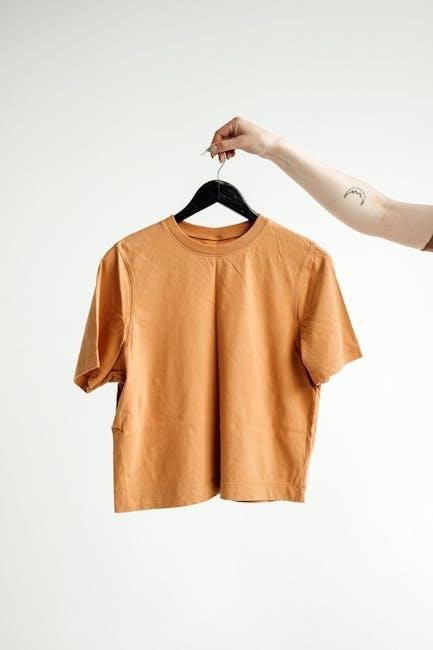
Navigating t-shirt sizing can be tricky! Accurate measurements, understanding styles, and checking brand charts are key to finding your perfect, comfortable fit.
Why Accurate Sizing Matters
Choosing the right t-shirt size significantly impacts comfort and appearance. An ill-fitting shirt can be restrictive, unflattering, or simply uncomfortable to wear throughout the day. Accurate sizing ensures a relaxed yet tailored look, allowing for ease of movement and boosting confidence.
Furthermore, proper fit enhances the garment’s longevity; A shirt that’s too tight may experience undue stress on seams, leading to premature wear and tear. Conversely, an oversized shirt might lose its shape quickly. Taking the time to measure correctly and consult size charts prevents costly returns and ensures you enjoy your t-shirts for a longer period. Ultimately, accurate sizing is a small investment with substantial returns in comfort, style, and value.
Understanding Different T-Shirt Styles
T-shirt styles greatly influence how a garment fits. Classic fits offer a relaxed, straightforward silhouette, while slim fits are more tailored and close to the body. Loose or oversized styles provide maximum comfort and a trendy, relaxed aesthetic. Each style requires slightly different sizing considerations.
For example, a slim-fit tee might necessitate sizing up for comfort, whereas a loose-fit tee may fit true to size or even require sizing down if you prefer a less voluminous look. Crew necks, V-necks, and scoop necks also affect how a shirt drapes and feels. Understanding these nuances ensures you select a size that complements both the style and your body type, achieving the desired look and feel.

Men’s T-Shirt Sizing Guide
Men’s sizing relies on chest, shoulder, and neck measurements. Utilize standard charts, but always verify with the specific brand for optimal fit!
Chest Measurement
Accurate chest measurement is fundamental for men’s t-shirt sizing. Use a flexible measuring tape and measure around the fullest part of your chest, keeping the tape level and under your armpits. Ensure a comfortable, not tight, fit during measurement.
Record this measurement in inches or centimeters. Many size charts utilize half-chest measurements, so divide your full chest measurement by two. Compare this value against the brand’s specific size chart. Remember that chest size often correlates directly with t-shirt size (Small, Medium, Large, etc.).
Consider your build; a broader chest might necessitate sizing up, even if your neck and shoulder measurements suggest a smaller size. Don’t assume your usual size – always measure and consult the chart!
Shoulder Measurement
Determining shoulder measurement is crucial for a well-fitted t-shirt, especially impacting how the garment sits and feels. Measure from the outer edge of one shoulder to the outer edge of the other, across the back. Keep the measuring tape straight and follow the natural curve of your shoulders.
This measurement helps determine if the t-shirt’s shoulder seams will align correctly with your own. A too-small shoulder measurement can cause the shirt to feel restrictive, while a too-large measurement can lead to a sloppy fit.
Compare your shoulder measurement to the brand’s size chart, often listed alongside chest and sleeve length. Consider your body type; broader shoulders may require a larger size.
Neck Measurement
Accurate neck measurement is vital, particularly for crew neck and v-neck t-shirts, ensuring comfort and a proper fit. Use a flexible measuring tape to measure around the base of your neck, where the collar would naturally sit. Keep the tape level and snug, but not too tight – you should be able to comfortably slide a finger underneath.
This measurement is often overlooked but significantly impacts how the t-shirt feels. A neck that’s too tight can be constricting, while one that’s too loose can appear sloppy.
Refer to the brand’s size chart, as neck sizes can vary. Consider your build; a larger neck may necessitate a size up.
Standard Men’s Size Chart (US/UK)
Here’s a general guide for US/UK men’s t-shirt sizes, but remember variations exist between brands. Sizes typically range from Small (S) to Extra-Large (XL) and beyond (2XL, 3XL, etc.).
Small (S): Chest 34-36 inches, Neck 14-14.5 inches.
Medium (M): Chest 38-40 inches, Neck 15-15.5 inches.
Large (L): Chest 42-44 inches, Neck 16-16.5 inches.
Extra-Large (XL): Chest 46-48 inches, Neck 17-17.5 inches.
These are approximate; always consult the specific brand’s chart. UK sizing often aligns closely with US sizing, but double-check. Consider your build – a broader chest might require sizing up, even if your neck measurement suggests a smaller size.

Women’s T-Shirt Sizing Guide
Women’s t-shirt sizing focuses on bust and waist measurements. Accurate measurements are crucial for a flattering fit, considering varying styles and brands.
Bust Measurement
Accurately measuring your bust is fundamental for women’s t-shirt sizing. Use a soft measuring tape, wearing your preferred bra, and measure around the fullest part of your bust, keeping the tape level across your back.
Ensure the tape isn’t too tight or loose; it should comfortably skim your body. Record this measurement in inches or centimeters.
For the most precise fit, it’s often helpful to have a friend assist you.
Remember that bust size isn’t always equivalent to bra size; it’s a specific measurement used for clothing fit.
Compare your bust measurement to the brand’s size chart to determine the appropriate t-shirt size. Different brands may have slight variations in their sizing, so always consult the specific chart.
Waist Measurement
Determining your waist measurement is crucial, especially for fitted or shaped women’s t-shirt styles. Locate your natural waistline – typically the narrowest part of your torso, above your belly button.
Use a soft measuring tape, ensuring it’s level all the way around your body. Breathe normally and don’t suck in your stomach.
Record the measurement in inches or centimeters.
While not always essential for looser-fit tees, knowing your waist size helps assess how a t-shirt will drape and fit around your midsection.
Compare this measurement with the brand’s size chart alongside your bust measurement for the best fit.
Standard Women’s Size Chart (US/UK)
Here’s a general guide to standard US/UK women’s t-shirt sizes, but remember variations exist! Size Small typically fits a bust of 34-36 inches and a waist of 26-28 inches.
Medium generally accommodates a 36-38 inch bust and 28-30 inch waist. Large fits a 38-40 inch bust and 30-32 inch waist.
Extra Large suits a 40-42 inch bust and 32-34 inch waist.
UK sizes often correspond directly, but double-check brand specifics.
These are approximate; always prioritize the brand’s individual chart for accurate sizing, considering both bust and waist measurements for optimal fit.
Unisex T-Shirt Sizing
Unisex tees offer a relaxed fit, blending men’s and women’s sizing. Conversion charts help determine the equivalent size for a comfortable, versatile style.
How Unisex Sizes Differ
Unisex t-shirts are designed to be worn by anyone, regardless of gender, offering a more relaxed and generally straighter cut compared to traditionally fitted men’s or women’s styles. They typically feature a classic crew neck and a slightly longer length, aiming for broad appeal and comfort.
However, understanding how unisex sizing translates to your body shape is crucial. While they avoid overly tailored silhouettes, unisex shirts often run larger than women’s equivalent sizes. This means a woman might select a size down from her usual fit, while a man might stick to his standard size or even size up for a looser feel.
The shoulder seams tend to sit closer to the edge of the shoulder, and the body is generally wider and less contoured. This creates a comfortable, easy-to-wear garment, but it’s essential to consult size charts and consider individual preferences for fit.
Converting Unisex Sizes
Converting between unisex and gender-specific sizes requires careful consideration. Generally, women should subtract one or two sizes from their typical women’s size when ordering a unisex t-shirt to achieve a similar fit. For example, a woman who usually wears a women’s Medium might opt for a Unisex Small or Extra Small.
Men, on the other hand, often find that unisex sizes align closely with their standard sizing, though some may prefer to size up for a more relaxed fit. It’s vital to always consult the specific brand’s size chart, as variations exist.
Remember to prioritize chest and shoulder measurements when converting. Comparing these measurements to the brand’s chart will provide the most accurate size recommendation. Don’t solely rely on small, medium, or large designations, as these can differ significantly between brands and styles.

Children’s T-Shirt Sizing
Kids’ sizes often rely on age and growth! Height and weight are crucial factors, alongside age-based charts, for a comfortable and appropriate fit.
Age-Based Sizing
Age-based sizing provides a starting point, but it’s not always precise. Typically, children’s t-shirt sizes begin around 6 months and progress upwards, often categorized as 6-12 months, 12-18 months, 2T, 3T, 4T, and so on. These categories correlate with approximate age ranges, but significant variations in a child’s development can occur.
For instance, a child at the higher end of an age range might require a larger size than indicated. It’s essential to remember that these are general guidelines, and individual children grow at different rates. Always consider a child’s actual measurements – height and weight – in conjunction with age when selecting a t-shirt size. Relying solely on age can lead to ill-fitting garments that are either too tight or too loose, impacting comfort and enjoyment.
Height and Weight Considerations
Beyond age, height and weight are crucial for accurate children’s t-shirt sizing. A child’s height dictates the necessary length of the shirt, preventing it from being too short and exposing the midriff. Weight influences the width and overall fit, ensuring comfortable movement without being restrictive.
Many brands provide size charts correlating height and weight ranges to specific sizes. Utilize these charts as a guide, but remember they are averages. If a child falls between sizes, consider their build – a more athletic build might benefit from sizing up. Prioritize comfort; a slightly looser fit is generally preferable to a tight one. Regularly checking a child’s measurements is vital as they grow rapidly, ensuring their t-shirts always fit well.
International T-Shirt Size Conversions
Global sizing varies! US sizes differ from European and Asian standards; conversion charts are essential for accurate online purchases and avoiding fit issues.
US to European Size Conversion
Converting between US and European t-shirt sizes requires careful attention, as they don’t align directly. Generally, a US size Small translates to a European size 38, while a US Medium corresponds to a European 40. A US Large typically equates to a European 42, and an Extra Large becomes a European 44. However, these are approximations, and variations exist between brands.
It’s crucial to consult specific brand size charts whenever possible, as European sizing can be more nuanced. Some brands may run smaller or larger than others. When in doubt, it’s often advisable to size up, especially if you’re between sizes. Always prioritize checking the chest measurement in inches or centimeters to ensure the best fit, rather than relying solely on the letter size.
US to Asian Size Conversion
Asian t-shirt sizes generally run significantly smaller than US sizes. A common rule of thumb is to add 2-3 sizes when converting from US to Asian sizing. For example, a US Medium might require a Large or even an Extra Large in Asian sizing. This difference stems from variations in body measurements and cutting styles.
Always prioritize checking the garment’s specific measurements in centimeters, focusing on chest and shoulder width, rather than relying on the labeled size. Brand size charts are essential, as discrepancies exist. If a size chart isn’t available, err on the side of caution and choose a larger size to avoid a too-tight fit; Consider the fabric; less stretchy materials require more generous sizing.
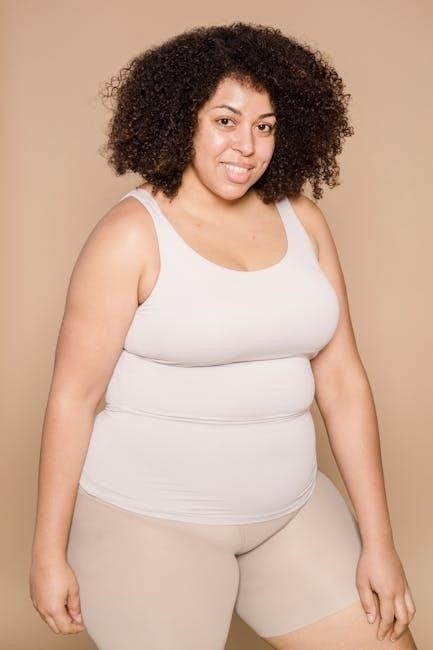
Measuring a T-Shirt for Size Reference
To determine your ideal size, lay a well-fitting t-shirt flat and measure its width and length, then compare those dimensions to size charts.
Width Measurement
Determining the width of a t-shirt is crucial for assessing fit. Lay the t-shirt on a flat surface, ensuring it’s smoothed out without stretching. Measure from the lowest point of one armhole, across the front of the shirt, to the lowest point of the other armhole.
This measurement represents the shirt’s width at its widest point. SkatePro’s guide, for example, provides width measurements in centimeters for various sizes – ranging from 35cm for sizes 6-8 to 44cm for sizes 12-14.
Compare this measurement to the brand’s size chart. Remember that width is a key indicator of whether a t-shirt will feel comfortable and allow for ease of movement. A snug width might indicate a slim fit, while a wider width suggests a more relaxed or loose style.
Length Measurement
Assessing t-shirt length ensures a flattering and comfortable fit. Lay the t-shirt flat and smooth. Measure from the highest point of the shoulder (where the collar meets the shoulder seam) down to the bottom hem of the shirt.
SkatePro’s size guide illustrates length variations, ranging from 50cm for sizes 6-8 up to 65cm for sizes 12-14. This measurement dictates how much of your torso the shirt will cover.
Consider your personal preference – do you prefer a cropped, standard, or longer length? Compare the measured length to the brand’s size chart to determine the best size. A longer length offers more coverage, while a shorter length can be more fashionable.
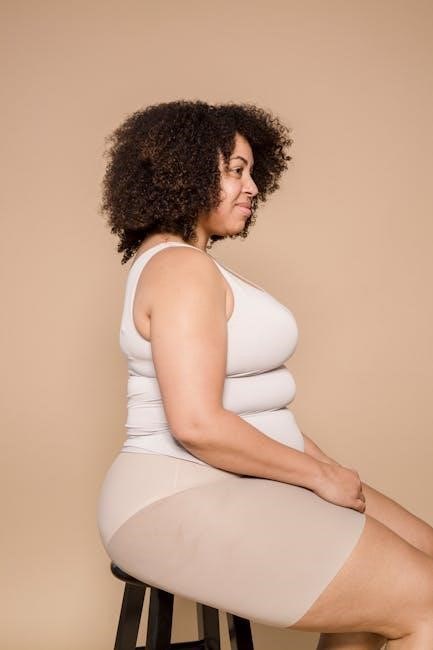
Brand-Specific Size Charts
Sizes vary significantly between brands! Always consult the specific brand’s size chart for the most accurate fit information before making a purchase.
Importance of Checking Brand Charts
Why are brand-specific size charts so crucial? The simple answer is consistency – or rather, the lack of it! Unlike standardized clothing measurements, t-shirt sizing can fluctuate dramatically from one manufacturer to another. What you consider a ‘Medium’ in one brand might feel like a ‘Small’ or ‘Large’ in another.
These variations stem from differing design philosophies, fabric choices, and target demographics. A brand focusing on slim-fit styles will naturally have different measurements than one specializing in relaxed, oversized tees. Ignoring these charts can lead to frequent returns and frustrating shopping experiences.
Therefore, always prioritize the brand’s provided chart, even if you typically wear a specific size. Taking a few moments to compare your measurements against their guide will significantly increase your chances of getting the perfect fit and enjoying your new t-shirt!
Where to Find Brand Size Charts
Locating a brand’s size chart is usually straightforward. Start by visiting the brand’s official website. Most retailers prominently display a “Size Guide” link, often found in the website’s footer, or on each product page near the size selection options. Look for a dedicated sizing section, frequently including detailed measurement tables.
If shopping through online marketplaces like Amazon or Etsy, check the specific seller’s product listing. They are responsible for providing accurate sizing information. Many sellers link directly to the brand’s official chart.
Don’t hesitate to contact customer service if you can’t find the chart. They can usually email it to you or direct you to the correct resource. Remember, a little research saves potential hassle!
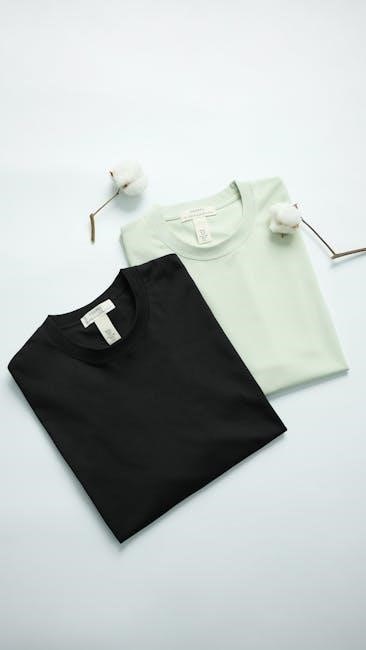
T-Shirt Material and Fit
Fabric composition significantly impacts fit. Consider how different materials – like cotton, polyester, or blends – stretch and drape, influencing your size choice.
How Fabric Affects Size
The material composition of a t-shirt dramatically influences how it fits and, consequently, the size you should choose. Natural fibers like 100% cotton tend to shrink slightly after washing, so you might consider sizing up, especially if you prefer a looser fit. Conversely, fabrics with polyester or other synthetic blends are more resistant to shrinkage and will maintain their shape better.
Stretchier materials, such as those containing spandex or elastane, offer more give and flexibility. These fabrics can conform to your body shape, potentially allowing you to wear a smaller size comfortably. Heavier weight fabrics, like thick cotton or fleece, will generally have a more structured fit, while lighter weight fabrics drape more loosely. Always consider the fabric’s properties when comparing yourself to a size chart!
Understanding Different Fits (Slim, Regular, Loose)
T-shirt fits significantly impact the overall look and comfort. A slim fit t-shirt is designed to hug the body closely, offering a more tailored silhouette – often best for those with a leaner build. A regular fit provides a classic, comfortable cut with moderate roominess, suitable for most body types and everyday wear.
Finally, a loose fit or relaxed fit offers maximum comfort and freedom of movement, with a generous cut that drapes away from the body. This style is ideal for warmer weather or those who prefer a more casual, effortless look. When selecting a size, consider your preferred style and how you want the t-shirt to fit – tighter, standard, or relaxed!